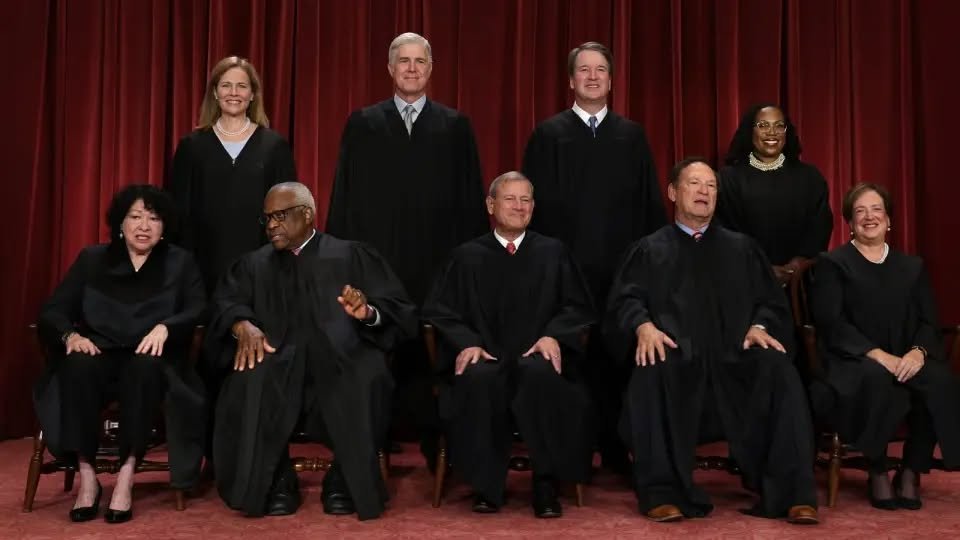
The U.S. Supreme Court has indicated its intention to address the issue of whether race may still be a factor in the creation of voting maps, thereby setting the stage for a significant legal confrontation with far-reaching consequences for congressional districts nationwide, especially those with substantial minority populations.
In broadening the scope of a case already on its agenda from Louisiana, the Court has declared it will consider arguments that question whether the 1965 Voting Rights Act continues to warrant the deliberate establishment of majority-Black or majority-Hispanic districts.
The result could not only transform numerous congressional maps but also resonate through state and local legislative boundaries, potentially changing the electoral framework at all levels of American governance, as reported by Bloomberg News.
Currently, the U.S. House comprises 11 majority-Black and 31 majority-Hispanic districts, as per a Bloomberg News analysis of the most recent U.S. Census data.
The timing is crucial, the outlet reported. Republicans in Texas are advancing an unusual mid-decade redistricting initiative aimed at establishing an additional three to five districts that lean Republican. In contrast, Democrats in states such as California and New York have indicated they may revisit their own maps in response. These initiatives could be pivotal in the struggle for control of the House, where a Democratic majority would possess the authority to obstruct President Donald Trump’s legislative agenda and initiate thorough investigations into his administration.
For many years, the Supreme Court has interpreted the Voting Rights Act as necessitating, under specific conditions, the establishment of majority-minority districts as a protective measure against voter suppression tactics that historically affected Black communities in the South—such as poll taxes, literacy tests, and intimidation. However, conservative justices on the court have increasingly questioned whether these protections are still constitutionally warranted today, with some critics pointing out that the existing legal framework continues to depend on findings from 1982, even though Congress reauthorized the law in 2006.
Initially, the court was anticipated to reach a decision on the Louisiana case by the conclusion of its term in June. However, in an uncommon decision, the justices chose on June 27 to hear further arguments and broaden the legal parameters of the case.
At the heart of the contention is Louisiana’s 2022 congressional map, which incorporated a second majority-Black district following a lower court’s determination that the state—home to a 33% Black population and six congressional seats—likely required another such district to adhere to the Voting Rights Act. The resulting 6th District extends 250 miles from Shreveport to Baton Rouge, traversing predominantly Black regions.
The new map maintained Republican strongholds, including th