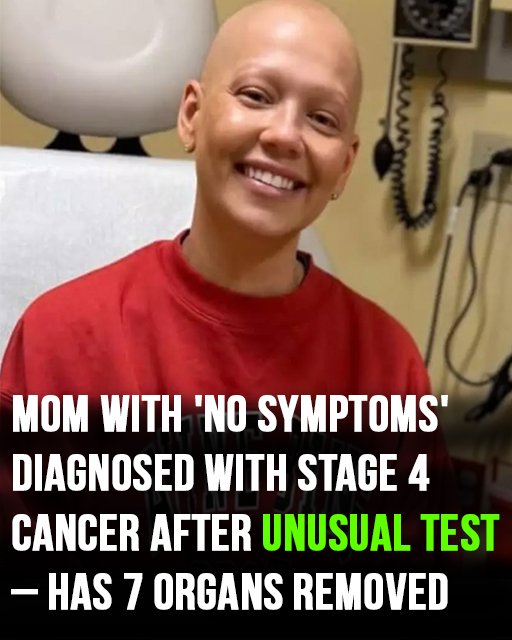
A woman from the United States, unaware that she was severely afflicted with cancer, underwent multiple organ removals to preserve her life.
Louise Altese-Isidori mentioned that she frequently received compliments on her appearance and maintained a healthy, joyful lifestyle without any alarming symptoms. However, she and her family were oblivious to the fact that she was battling ovarian cancer.
According to the American Cancer Society, ovarian cancer ranks among the top causes of cancer-related fatalities in women, and Louise’s condition remained undiagnosed for an extended period due to the absence of concerning symptoms.
In reality, it was only after the 50-year-old followed her fertility doctor’s recommendation to have a transvaginal sonogram every six months that she discovered an issue. Another physician deemed this procedure “unnecessary,” but Louise considered it “no big deal” to have it done annually.
This choice likely played a crucial role in saving her life.
In October 2024, during a routine appointment, Louise’s doctor identified a significant cyst on her ovary, which had not caused her any discomfort.
Given the cyst’s size, her doctor recommended an Ova1 blood test to determine if it was cancerous. The initial results were negative, as were those of a follow-up test conducted a month later.
Nevertheless, the cyst persisted, and Louise was advised to undergo an oophorectomy. Upon reviewing her ultrasound, the surgeon who was scheduled to perform the operation suspected that something was amiss.
“I don’t want to alarm you since your test results were negative, but I am concerned about the findings,” he informed Louise, as reported by the New York Post. “I need to schedule you for surgery to remove your ovaries as soon as possible.”
On December 20, Louise underwent what she believed would be a standard procedure. However, upon awakening, she received a devastating diagnosis.
“When he operated, he discovered that I was filled with cancer,” she recounted.
A biopsy confirmed that Louise was diagnosed with Stage 4B ovarian cancer, indicating that the disease had already metastasized to other organs.
“I was completely stunned. I kept anticipating someone would say there had been an error,” Louise remarked.
Just a few days later, Louise secured an appointment at Memorial Sloan Kettering Cancer Center in New York. She was placed under the supervision of Dr. Dennis Chi, who leads the hospital’s Ovarian Cancer Surgery Section.
“I consider myself very fortunate in an incredibly unfortunate situation, as everything seemed to fall into place,” Louise stated.
“When he operated, there was cancer present in my colon, my liver, it had already spread to my chest — and I had felt entirely well,” she continued.
Dr. Chi had to excise her spleen, appendix, gallbladder, uterus, ovaries, fallopian tubes, and the lining of her stomach, all of which were affected by cancer. Although part of her liver and colon were preserved, she needed a colostomy bag attached to a small opening in her lower abdomen for waste elimination.
In the end, Louise spent 18 days in the hospital. “I would remind myself, ‘Alright, that’s enough. No more self-pity. We have much to accomplish,’” she shared.
She subsequently commenced chemotherapy about a week later, describing that treatment phase as “a battle of the mind.”
Recently, Louise underwent surgery to remove her colostomy bag. Following that, she received the most encouraging news: Her CA 125 test — which measures a protein often elevated in women with ovarian cancer — had returned to normal levels.
“I’m technically in remission,” she clarified.
“My hair is beginning to grow back, and I feel well.”
According to the Ovarian Cancer Research Alliance, the likelihood of recurrence can be as high as 95% for patients diagnosed at Stage 4.
“It seems rather absurd to think that I triumphed over it at just seven months and that I have conquered it for life. However, I am doing well today,” she remarked. Louise further mentioned that she is currently taking a PARP inhibitor pill, a specific form of targeted therapy designed to postpone or prevent the recurrence of cancer.
“I aspire to change the perception of stage four cancer,” she expressed. “I want individuals to understand that it is still possible to lead a fulfilling life — even while using a colostomy bag.”
“It is crucial to acknowledge that there is a significant amount of hope,” she continued. “This is not the end of the road.”
“Perhaps I made a sacrifice for the greater good, and now there is a woman following me who will not have to endure the same struggles,” she added.
Louise experienced no symptoms; however, there are frequently warning signs that women should be vigilant about. These signs include: bloating, fatigue, a rapid feeling of fullness, alterations in bowel or bladder habits, and pain in the pelvic, back, or abdominal regions.