🟢 Choose the Right Location
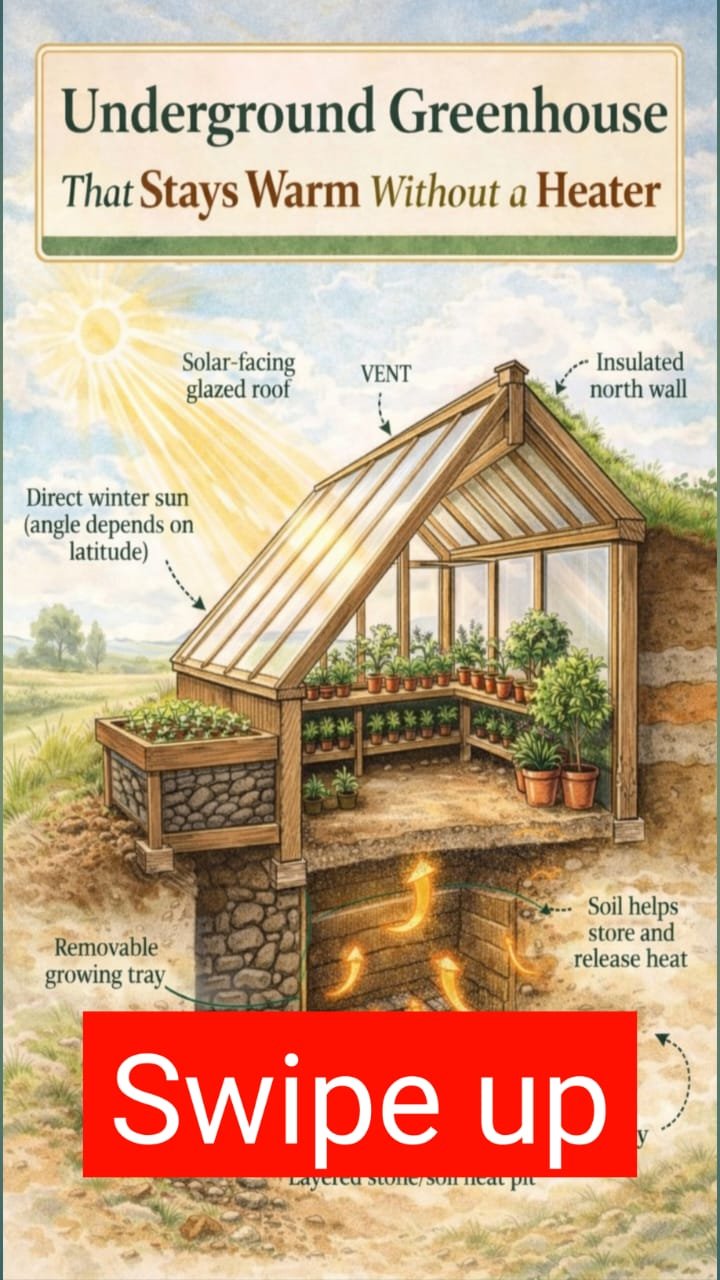
Select a site with unobstructed sunlight during winter, ideally south-facing in the Northern Hemisphere. Avoid low-lying areas where cold air and water collect. Good drainage is critical—sloped land or slightly elevated ground works best to prevent flooding and root rot.
🟢 Dig the Heat Pit
Excavate a rectangular or square pit deep enough to reach below the frost line (usually 6–10 feet, depending on your region). The surrounding earth acts as natural insulation, stabilizing temperatures by staying warmer in winter and cooler in summer.
🟢 Create the Thermal Mass Base
Line the bottom of the pit with stones, gravel, bricks, or compacted earth. These materials store solar heat during the day and slowly release it at night. The more thermal mass you include, the more stable the internal temperature will be.
🟢 Build the Wooden Frame
Construct a strong frame using pressure-treated or rot-resistant wood such as cedar or treated pine. The frame must support the roof glazing and resist soil pressure on buried sides. Reinforce corners and joints for long-term durability.
🟢 Install the Insulated North Wall
The north wall should be heavily insulated using earth berming, straw bales, rigid foam insulation, or packed soil. Adding a reflective surface (like light-colored boards or foil-backed insulation) helps bounce sunlight back onto plants, improving light efficiency.
🟢 Add Transparent Glazing
Install glass or polycarbonate panels on a slanted, south-facing roof. The angle should match your latitude to maximize winter sun exposure. Proper sealing is essential to prevent heat loss and drafts while allowing maximum light penetration.
🟢 Fill with Quality Soil
Use rich, well-draining soil amended with compost, aged manure, and organic matter. Raised beds, shelves, or terraced planting areas improve airflow, drainage, and organization, making plant care easier.
🟢 Provide Proper Ventilation
Install adjustable vents, roof openings, or small windows near the top of the structure. Ventilation prevents overheating on sunny days, reduces excess humidity, and helps avoid mold and fungal diseases.
🟢 Arrange Plants Strategically
Place heat-loving crops (tomatoes, peppers, cucumbers) closer to the thermal mass and south-facing areas. Cold-tolerant greens (lettuce, spinach, kale) can be planted near edges or cooler zones to maximize space and productivity.
🟢 Maintain and Monitor Regularly
Check soil moisture, temperature, and airflow weekly. Use a thermometer to track nighttime lows. Minimal adjustments—opening vents, watering properly, or adding mulch—keep the greenhouse productive year-round.
How to Build an Underground Greenhouse That Stays Warm Naturally